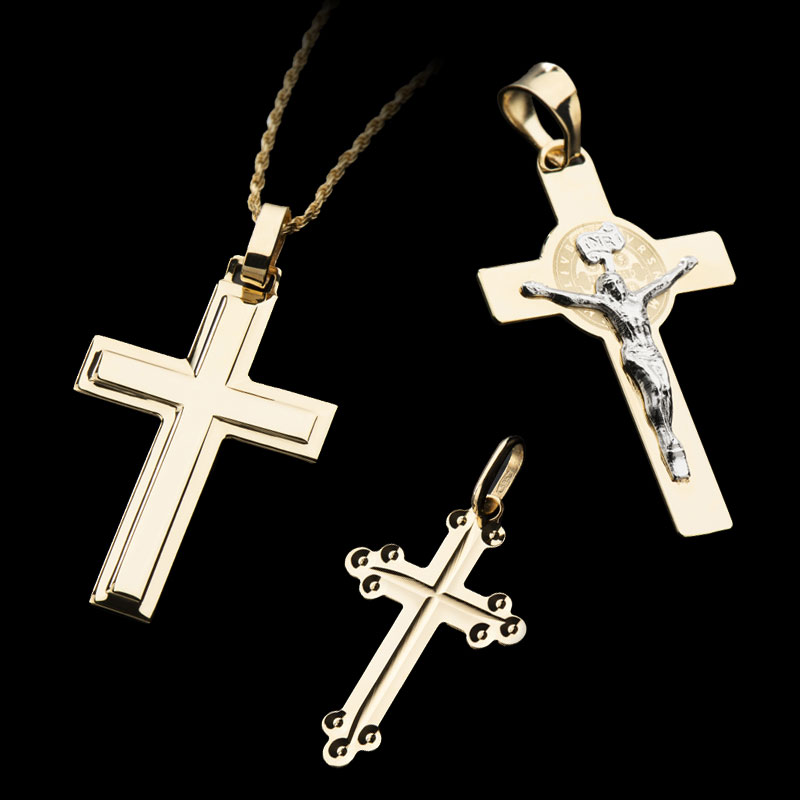
Why the shape of a cross changes its message
The cross is a universal sign. Yet not every cross “says” the same thing. Shape affects proportions, how light plays on the surface, and how the piece sits on the neck. It also changes the way you wear it: understated and everyday, or richer and more expressive.
Choosing between a classic cross, a Celtic cross, and a modern cross means deciding what kind of voice you want the symbol to have: more traditional, more rooted in history, or more current.
Materials and finishes: gold and silver shape the character
The same cross takes on a different identity depending on the metal.
Yellow gold warms and softens reflections. White gold sharpens contrast and makes details stand out. Rose gold gives the symbol a gentler, more contemporary feel. In 925 silver, especially when rhodium-plated, a cross looks bright and visually “clean.”
Finishes matter just as much: high polish for stronger brilliance, satin for a quieter tone, diamond-cut or sandblasted details to create movement in the light without adding bulk.
Classic cross: balance, proportion, immediacy
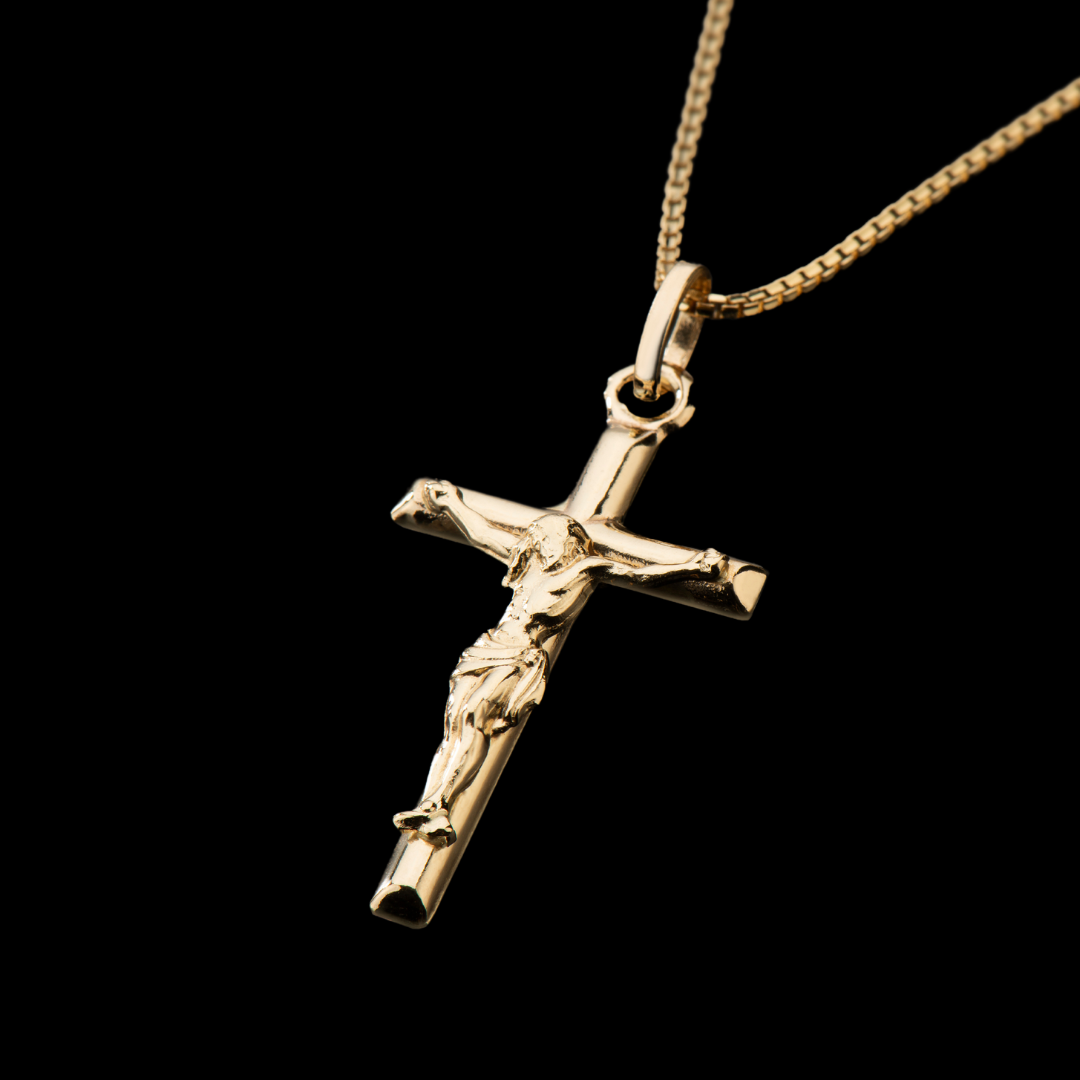
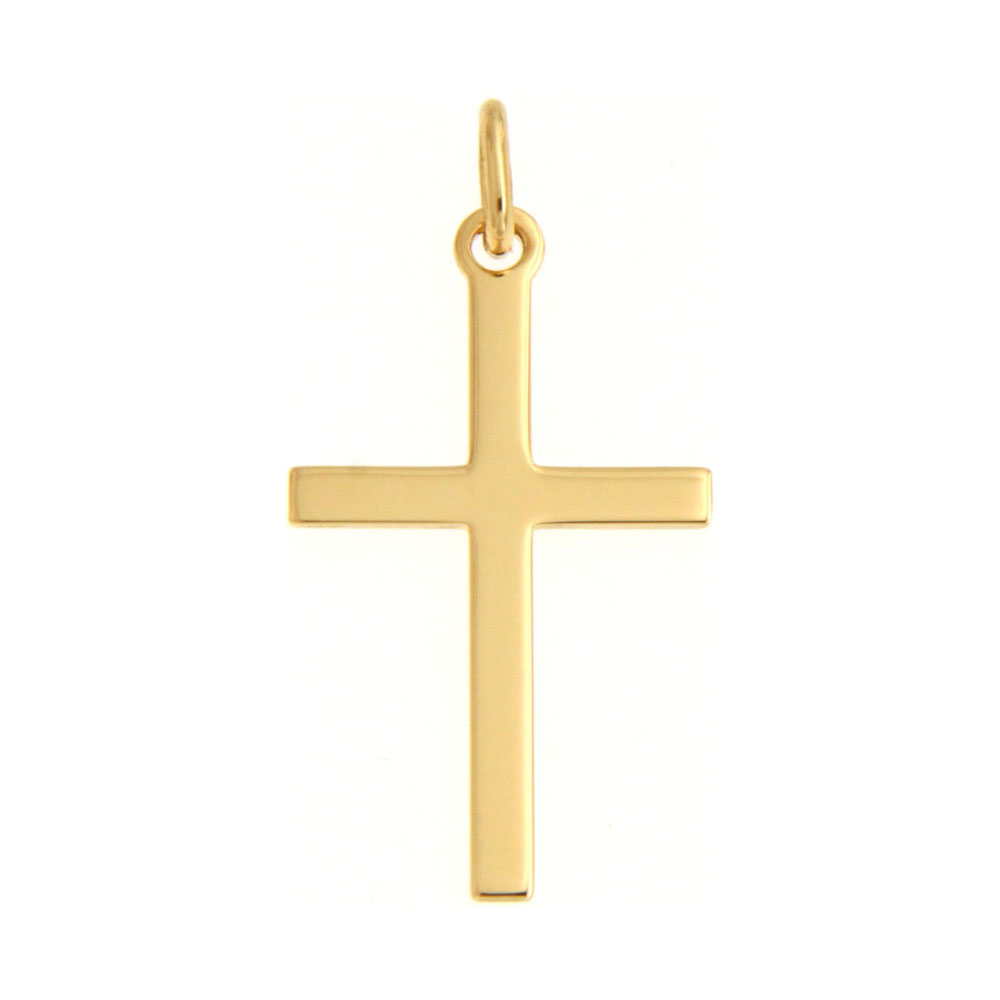
The classic cross is the most instantly recognisable: a longer vertical arm and a shorter horizontal one.
It doesn’t need decoration to work. What matters here is proportion — thickness, edges, and the clarity of the profile.
It’s perfect if you want a cross that feels natural to wear. It looks right on its own, but it also works beautifully as a base for layering. And if you’d like to add a dedication, the smooth back often offers the cleanest space for a discreet engraving.
Celtic cross: an ancient sign rich in symbolism
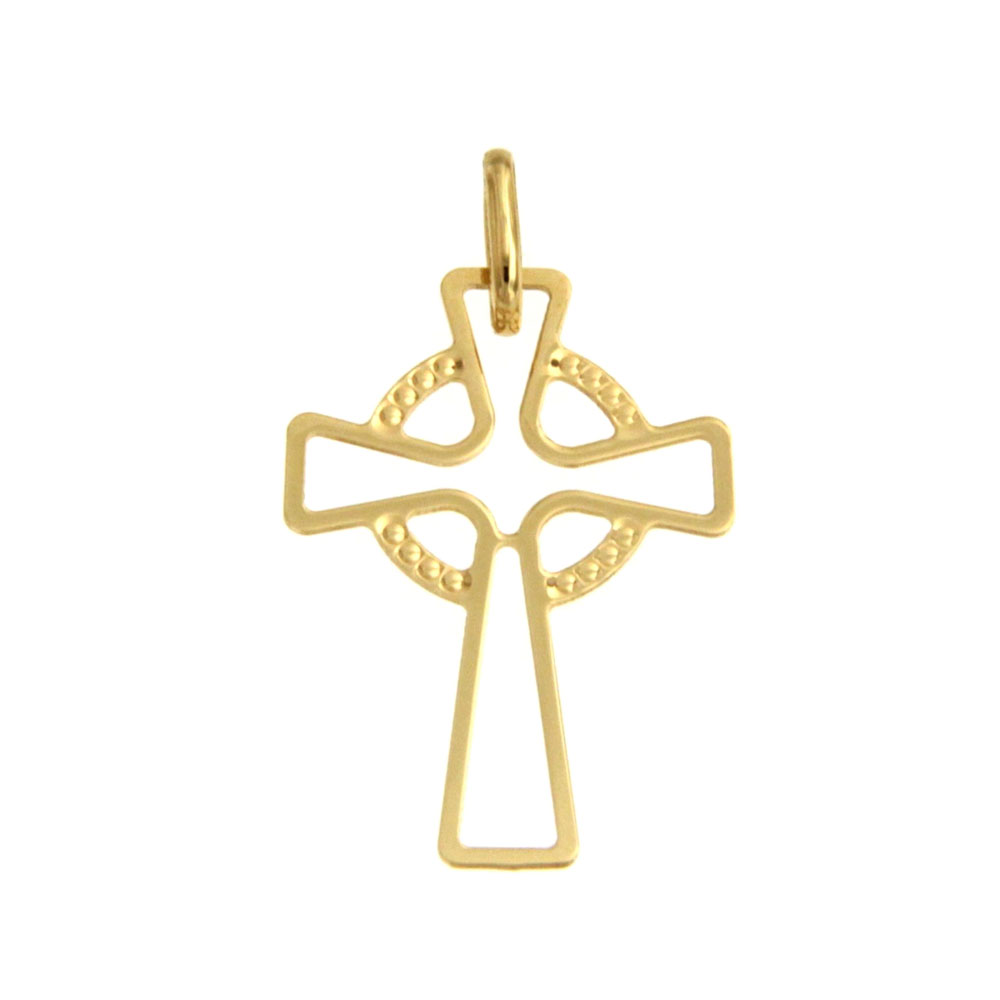
You recognise a Celtic cross right away by the ring that frames the intersection of the arms. It’s iconic, but not only visually: it recalls the link between earth and sky, between cyclic time and vertical ascent — between Christian tradition and the culture of the Celtic lands.
Visually, it’s a more “storytelling” cross: more elements, more rhythm, more texture. You often see knots, interlacing, engraved lines. That’s why it pairs especially well with finishes that highlight detail: light satin effects, polished/matte contrast, or selective diamond-cut touches.
Choose it if you want a symbol with a visible history. A pendant that doesn’t simply read “cross,” but carries an entire world with it.
Modern cross: clean lines, sharp edges, contemporary light
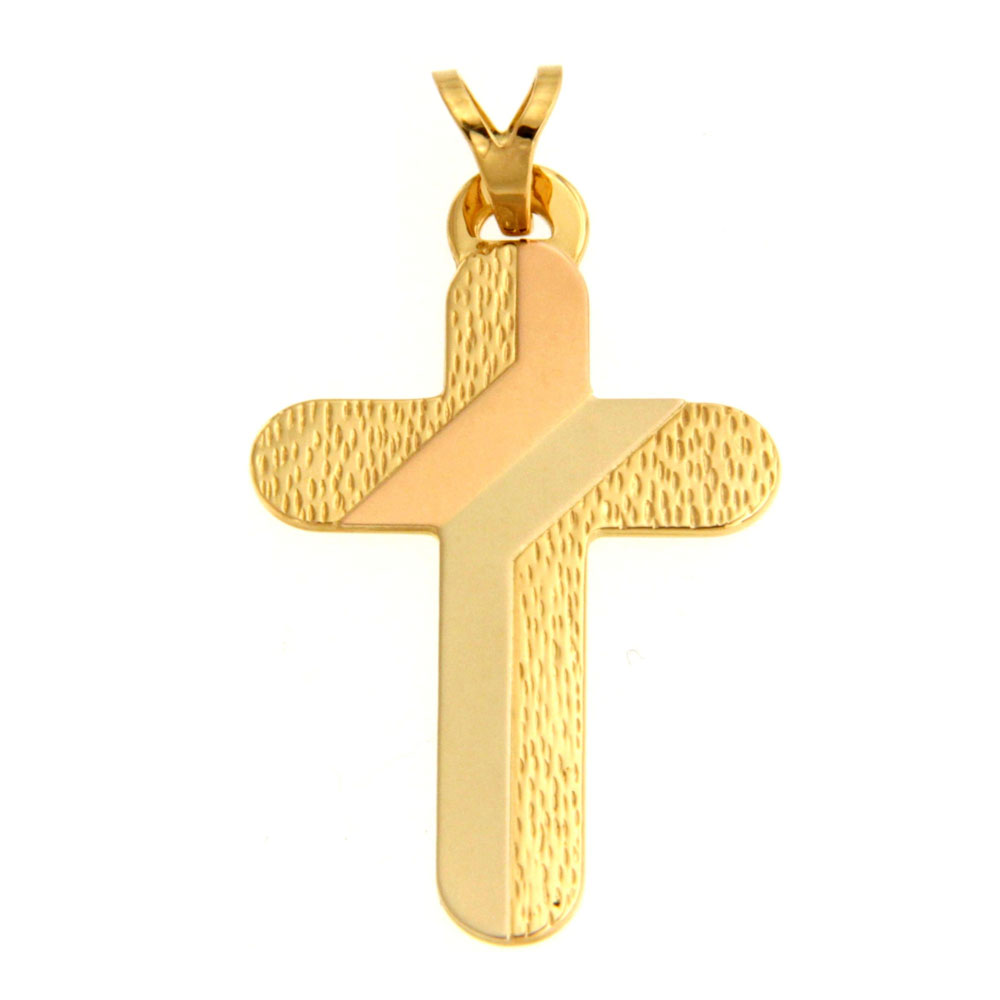
A modern cross doesn’t change the meaning — it changes the language it’s spoken in.
Proportions are more streamlined, often more graphic: even arms, crisp edges, slimmer profiles, sometimes openwork or built on minimal geometry.
Here, surfaces do the heavy lifting. Modern design often plays with:
It’s a great option if you like a recognisable symbol with a current feel. Perfect for those who wear minimal jewellery and want a cross that blends in, rather than takes over.
How to tell them apart at a glance
Which one should you choose? It depends on how you live it
With the classic cross, you can’t go wrong: versatile, always appropriate.
The Celtic cross is more identity-driven, ideal if you love symbols rich in history.
The modern cross is for those who want a clean sign with a contemporary, lightweight presence.